Finance Officer Vacancy

Posted on Categories Uncategorized  Leave a comment on Finance Officer Vacancy

The position is responsible for managing the financial operations of the organisation. You will ensure accurate financial reporting, budgeting, and analysis, as well as compliance with financial regulations. Your role is crucial in maintaining the financial health of the organisation and supporting strategic decision-making.

Finance Officer Vacancy

  • Position : Finance Officer
  • Location : Eldoret
  • Qualification: Degree/CPA-k
  • Job Type : Full-time
  • Deadline : 27th January 2025

Introduction

EERUi with the support of partners executes programmes that provide access to quality education for the low-income communities in Kenya. We achieve this by partnering with like-minded organizations, development partners and individuals to provide capacity building, technical support and infrastructural support to schools and communities. In order to carry out these activities, EERUi engages talented and passionate staff. We are pleased to announce a vacancy in the position of Finance Officer.

The Role

The position is responsible for managing the financial operations of the organisation. You will ensure accurate financial reporting, budgeting, and analysis, as well as compliance with financial regulations. Your role is crucial in maintaining the financial health of the organisation and supporting strategic decision-making.

The Finance Officer is an integral part of the senior management team and is expected to be proactive in documenting, improving and enforcing good accounting practice and processes in the company. Internal auditing of inventory movement and reporting on any variances is expected as an integral part of the Management reports.

As well as meeting the job-specific and professional requirements of the role, the applicant will be evaluated on their attitude and their fit with the organisation. We are looking for someone who will share our passion for what the organisation represents.

Key Responsibilities

  • Ensure that all financial transactions are carried out and recorded in accordance with EERUi procedures and policies. 
  • Cash flow management and monthly bank and M-Pesa reconciliations. 
  • Review and verify all copies receipts for all expenses before they are entered into accounting system. 
  • Review procurement transactions prepared by operations team to ensure that all supporting documentation and approvals are accurate.
  • Ensure the maintenance of proper accounting documentation. 
  • Petty cash management and custody 
  • Preparation and prompt settlement of statutory and other payroll deductions i.e. PAYE, NSSF, NHIF,NITA etc 
  • Ensuring proper book of accounts are kept and maintaining a sound archiving (filing and retrieval) system. 
  • Preparation of various supporting schedules to the financial statements to facilitate annual audit and assist in the fieldwork process.
  • Preparations of year end accruals and monthly reconciliation of the accruals. 
  • Preparation of the payroll journal and monthly reconciliation of the payroll control code
  • Develop, Implement, review and update current financial management policies as required by the board or donors and in compliance with financial regulations. 
  • Any other reasonable duty assigned by management. 
  • Develop, Implement, review and update current financial management policies as required by the board or donors and in compliance with financial regulations. 
  • Establish and implement internal controls, procedures and systems to ensure that the organization’s operations are executed in line with approved plans and agreements.
  • Plan, organize and train staff on all organizational policies and hold forums to collect feedback from staff on the policy changes and submit the recommendations to the CEO.
  • Accurately and timely prepare and submit grant reports to the donors through the CEO. 
  • Act as the finance focal point person for the organization with the external parties (donors, partners, regulators etc) and through the CEO provide responses and other financial information to such parties as requested. 
  • Review draft donor agreements and provide informed advice to the CEO before signing of the agreement.
  • Ensure proper contracting and engagement of internal and external auditors. 
  • Timely and accurate preparation of internal and external financial statements for audit purposes. 
  • Review the annual returns to the NGO Board and Registrar of Companies prepared by the accountant. Ensure such returns are done within the set timeline.

Knowledge

1. Skills and Experience Required for this Role

  • Bachelor’s degree in Accounting, Finance, Business Administration or a related field from a recognised university.
  • Professional accounting qualification i.e. CPA-K or equivalent.
  • Proven experience as a Finance Officer or in a similar role,preferably in a non-governmental organisation.
  • Strong knowledge of financial regulations, accounting standards, and financial reporting.
  • Proficiency in financial management software and tools.
  • Advanced Excel/Google Sheet skills: strong ability to extract, clean, and manipulate large data sets.
  • Strong initiative and ability to drive process improvements that impact multiple teams.

2. Personal Attributes

  • Strong strategic thinking and analytical skills
  • Excellent negotiation and relationship-building abilities
  • Strong attention to detail and accuracy
  • Good communication skills and the ability to work effectively in a team environment
  • Strong organisational and multitasking skills
  • Excellent analytical, problem-solving, and organizational skills.
  • Strong leadership and team management skills, with a focus on developing and motivating employees.

Job Application

If this job opportunity is of interest to you, please click the apply button below and fill out the form   on or before 27th January 2025.

Keeping Pace

Posted on Categories Uncategorized  Leave a comment on Keeping Pace

Keeping Pace

Keeping Pace

Keeping Pace

Many children in Sub-Saharan Africa are schooling but not learning. In Kenya, 3 out of 4 children in lower primary schools cannot read a grade 3 level text. Most of these children are from poor households. Often, children who miss key concepts in the early grades never have a chance to catch up, no matter how many years they spend in school. This affects further learning and subsequently inhibits their life chances hence perpetuating the endemic poverty cycle in families.


The keeping pace is premised on the infamous Teaching at the Right Level (TaRL) approach pioneered by PRATHAM in India and it targets the root of the learning crisis by transforming the structures that lead to it. The approach works by dividing children (generally in Grades 3 to 5) into groups based on learning needs rather than age or grade; dedicating time to basic skills rather than focusing solely on the curriculum; and regularly assessing student performance, rather than relying only on end-of-year examinations.

The program is holistic, interactive, child-centered and focusses on the basics to improve learning for all. It seeks to accelerate basic reading and numeracy competencies of children furthest behind. It equips learners in grades 3, 4 and 5, who are left behind with the desired grade 2 reading and math competencies. This way, learners will have started the journey of reading and math and can meaningfully and independently engage in the classroom learning process.

The focus is on basic skills rather than solely on the curriculum. The student performance is regularly assessed to inform their progression to the next level.

The program has five major steps

  • Implementation teams’ capacity building

Since this program is unique in its delivery, the facilitators/ teachers are first of all trained on the approach. The training is meant to ensure that the teachers fully understand the objectives of the approach and acquire the necessary knowledge for efficient delivery.

  • Assessment

The children are tested on the basic literacy and numeracy skills using simple tools. This is done to determine the competency level of the child. The assessment data is used to determine the grouping.

  • Grouping

Here the children are grouped based on the assessment data irrespective of their grade or age. The groups are homogeneous i.e. Every group has children with similar learning needs.

  • Classroom Activities

Each group is assigned a facilitator/teacher who creates activities and materials suited to children’s needs, rather than adhering to a linear curriculum. Classes are fun and fast-paced, and children strengthen a number of skills simultaneously.

  • Monitoring

There is continuous monitoring of the teaching and learning process to assess the progression of learners.

Keeping pace in action

Our Partners

Shaping the learning journey

Posted on Categories Uncategorized  Leave a comment on Shaping the learning journey

Shaping the learning journey

This program focuses on children that are at risk of missing the most important foundational basics in their early years. It addresses the root of lifelong disparities in learning, Behaviour, and health.

We seek to improve the quality of both early childhood teaching and learning, through the development of innovative curricula and research-based pedagogical standards, as well as the design of imaginative play materials and learning environments. These interventions are meant to make the children acquire the basic skills early in life.

The program also creates awareness among parents and society at large about the negative effect violence, abuse, neglect and malnutrition has on a child’s development and future life chances. We provide expert master classes and parenting events to empower parents to raise confident, respectful, healthy and successful children.

Our Partners

Education for Sustainable Development

Posted on Categories Uncategorized  Leave a comment on Education for Sustainable Development

Education for Sustainable Development

Education for Sustainable Development (ESD) empowers individuals with the knowledge, skills, values, and attitudes needed to address present and future challenges, and to create a sustainable future

At EERUi, Education for Sustainable Development (ESD) is woven through all our programs—equipping children, youth, caregivers, and educators with the knowledge, skills, values, and attitudes they need to respond to today’s challenges and build a more just, sustainable future.

We believe that ESD not only empowers learners to shape a better world, but also strengthens their academic performance, critical thinking, and social-emotional well-being. By integrating sustainability, equity, and global citizenship into education, we help communities thrive while addressing pressing environmental and social issues.

How we integrate ESD across our work

In schools and classrooms

We work with teachers to integrate ESD directly into school learning environments. Through training and co-designed activities, we help educators:

  • Embed sustainability concepts within the curriculum.
  • Lead classroom-based projects on climate change, conservation, and responsible consumption.
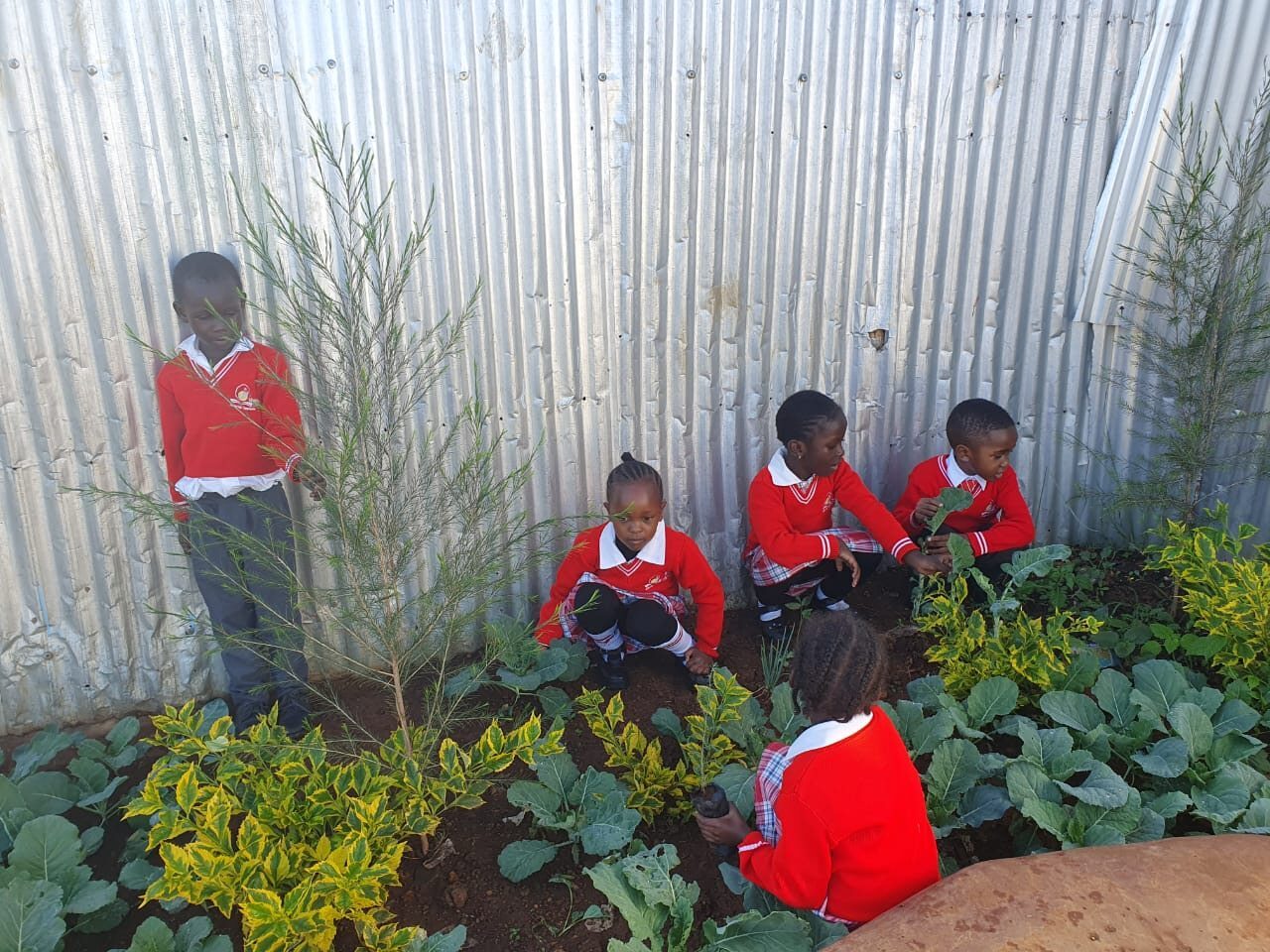
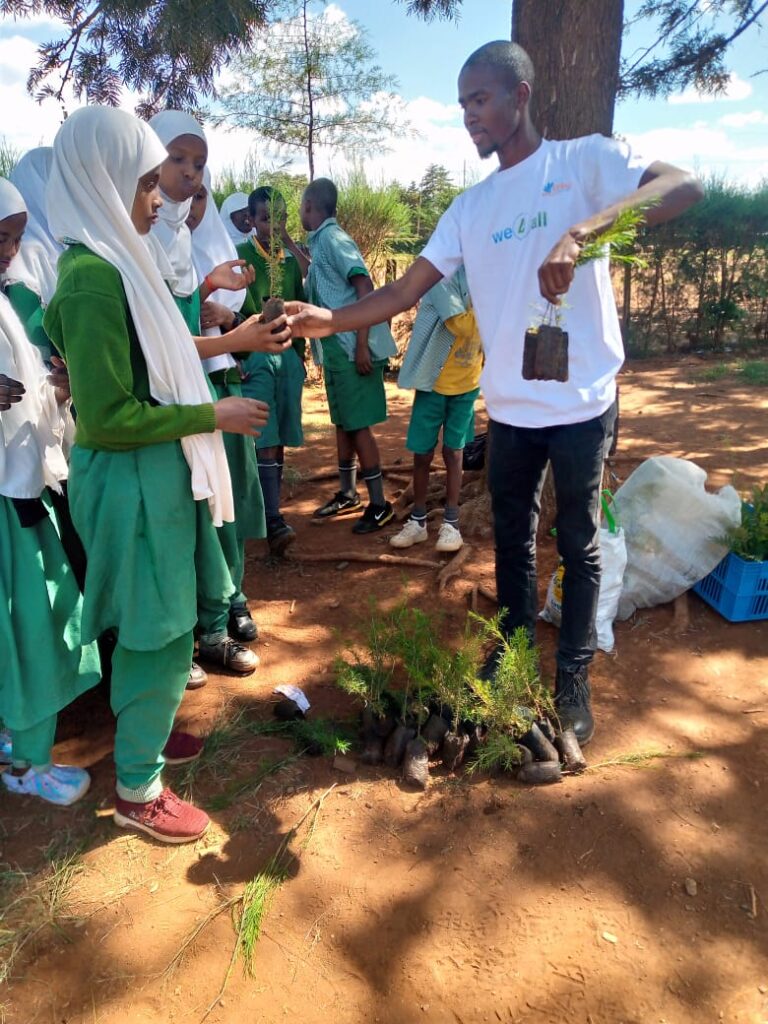
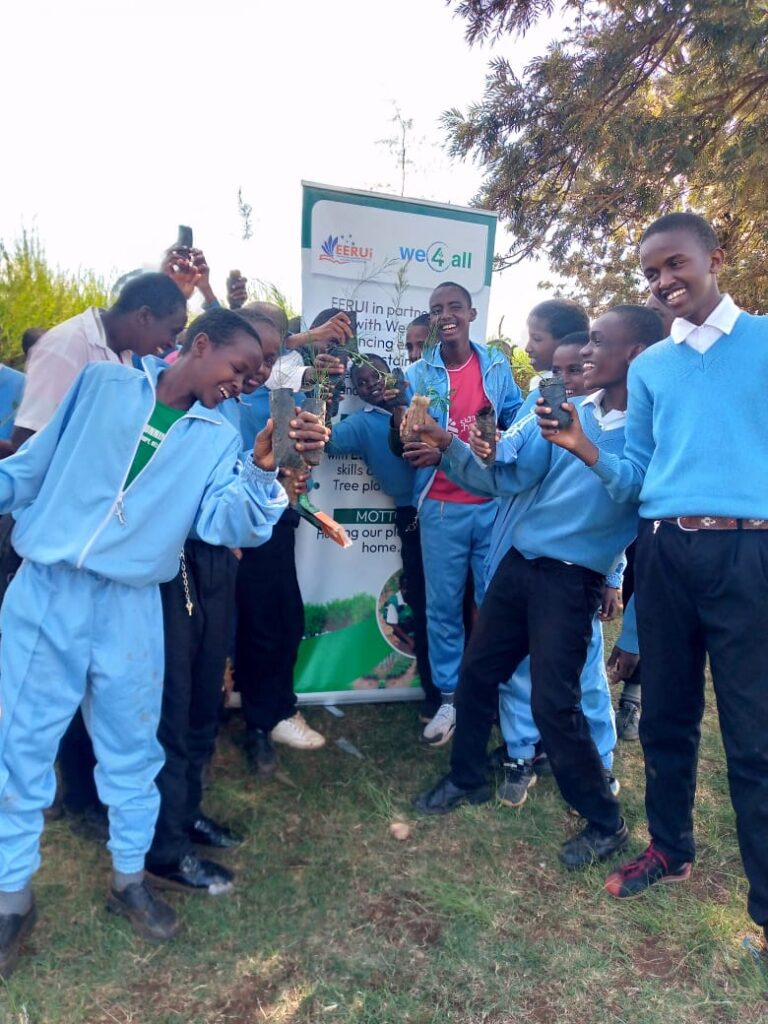
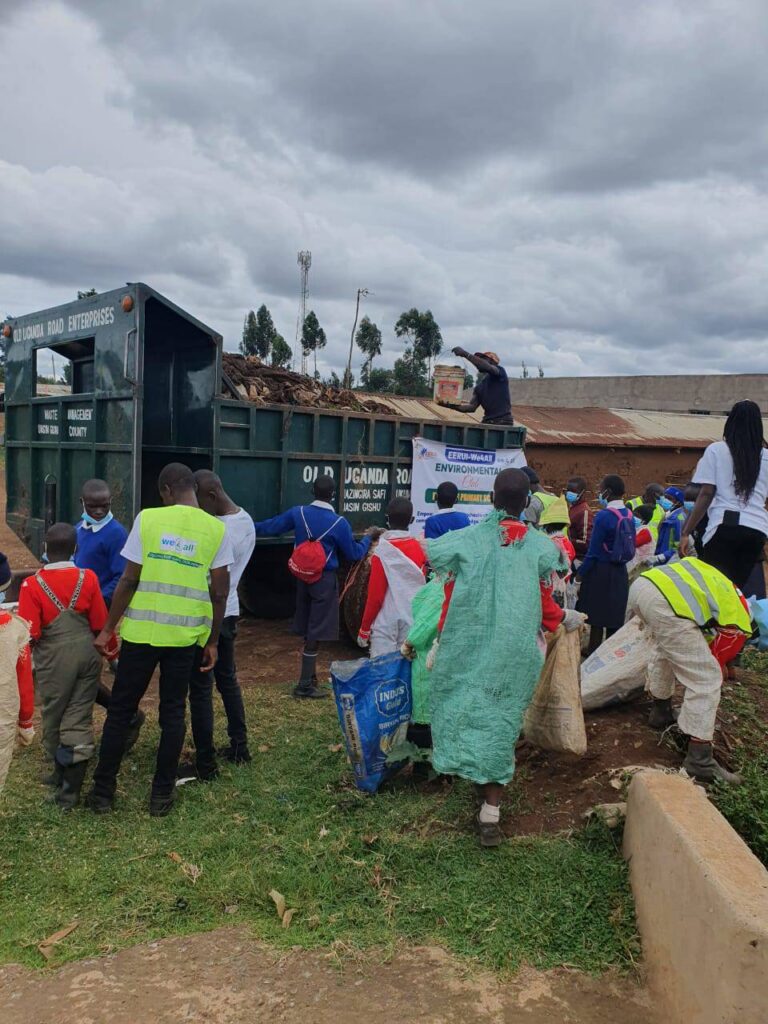
  • Facilitate schoolwide ESD initiatives, such as tree planting drives, school gardens and composting plastic waste collection and recycling and environmental awareness campaigns involving parents and the wider community.

These activities also empower children to understand their role in protecting the planet, take action within their communities through projects tied to real-world challenges and build skills in problem-solving, collaboration, and innovation.

In communities and with caregivers

We extend ESD beyond schools into homes and neighbourhoods by:

  • Training informal caregivers and parents on sustainable living practices, such as safe water use, nutrition, hygiene, and reusing materials for learning tools.
  • Organizing community clean-up events, urban gardening sessions, and local exhibitions to raise environmental awareness.

Encouraging caregivers and children to become stewards of their environment, using stories, play, and creativity to link sustainability to everyday life.

Our Impact

By embedding ESD into early childhood care, foundational learning, and community education, EERUi fosters a generation of responsible, reflective, and resilient learners—equipped not only to succeed in school but also to shape sustainable communities for years to come.

Our Partners